Yamaha Motor Co Ltd 2018 SR
The report outlines Yamaha Motor's commitment to achieving a sustainable society through its 'Environmental Plan 2050,' which targets a 50% reduction in CO2 emissions across product lifecycles. In 2017, the company successfully reduced CO2 emissions per unit of sales by 37% compared to 2009 levels. Significant initiatives include the global expansion of the Yamaha Riding Academy for traffic safety and the implementation of the Yamaha Clean Water Supply System in emerging markets. The company also joined the UN Global Compact and committed to the Science Based Targets initiative (SBTi). Furthermore, Yamaha Motor is focused on increasing diversity, aiming to triple the number of women in management positions by 2025.
Company: Yamaha Motor Co Ltd
Sector: Consumer Discretionary
Country: Japan
Year: 2018
Type: SR
Pages: 99
Yamaha Motor Co Ltd
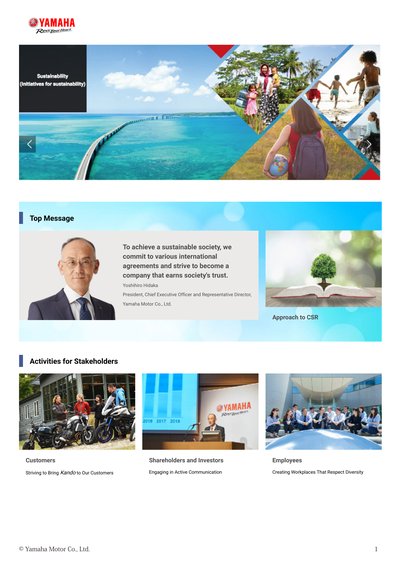
Sustainability Report
The report outlines Yamaha Motor's commitment to achieving a sustainable society through its 'Environmental Plan 2050,' which targets a 50% reduction in CO2 emissions across product lifecycles. In 2017, the company successfully reduced CO2 emissions per unit of sales by 37% compared to 2009 levels. Significant initiatives include the global expansion of the Yamaha Riding Academy for traffic safety and the implementation of the Yamaha Clean Water Supply System in emerging markets. The company also joined the UN Global Compact and committed to the Science Based Targets initiative (SBTi). Furthermore, Yamaha Motor is focused on increasing diversity, aiming to triple the number of women in management positions by 2025.
Sign in for free to access detailed sustainability data, reporting standards, and ESG metrics.
Document Details
Report Year
2018
Reporting Period
Jan 1, 2017 - Dec 31, 2017
Fiscal Year
2017
Type
Sustainability Report
Language
English
Pages
File Size
Standards & Assurance
Reporting Standards
Materiality Assessment
Assurance
ESG Data?Experimental — AI-extracted data, may contain inaccuracies
Emissions
Scope 1:
Scope 2:
Scope 3:
Energy Consumption
Water Consumption
Total Waste
Women in Management
Employees