Hamburger Hafen und Logistik AG 2017 AR2
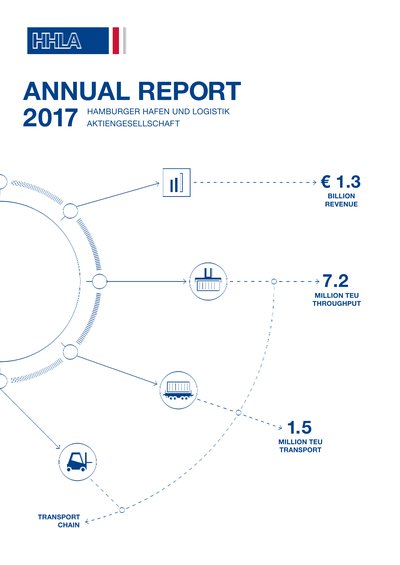
The report details the financial, operational, and sustainability performance of Hamburger Hafen und Logistik AG (HHLA) for the 2017 fiscal year. HHLA achieved a container throughput of 7.2 million TEU and container transport of 1.5 million TEU, resulting in –1.3 billion in revenue. In terms of climate action, the company reduced its specific CO2 emissions per container handled by 28.9% compared to the 2008 baseline, approaching its 2020 target of a 30% reduction. Key sustainability initiatives included expanding the eco-friendly Intermodal rail network with the opening of the Budapest hub terminal and transitioning to battery-powered and electric transport vehicles.
Company: Hamburger Hafen und Logistik AG
Sector: Transport & logistics
Country: Germany
Year: 2017
Type: AR2
Pages: 186
Back to company
Hamburger Hafen und Logistik AG
Annual Report
The report details the financial, operational, and sustainability performance of Hamburger Hafen und Logistik AG (HHLA) for the 2017 fiscal year. HHLA achieved a container throughput of 7.2 million TEU and container transport of 1.5 million TEU, resulting in –1.3 billion in revenue. In terms of climate action, the company reduced its specific CO2 emissions per container handled by 28.9% compared to the 2008 baseline, approaching its 2020 target of a 30% reduction. Key sustainability initiatives included expanding the eco-friendly Intermodal rail network with the opening of the Budapest hub terminal and transitioning to battery-powered and electric transport vehicles.
Sign in for free to access detailed sustainability data, reporting standards, and ESG metrics.
Document Details
Report Year
2017
Reporting Period
Jan 1, 2017 - Dec 31, 2017
Fiscal Year
2017
Published
Mar 28, 2018
Type
Annual Report with Sustainability Disclosures
Language
English
Pages
File Size
Standards & Assurance
Reporting Standards
Materiality Assessment
Assurance
Assurance Provider
Assurance Standard
ESG Data?Experimental: AI-extracted data, may contain inaccuracies
Emissions
Scope 1:
Water Consumption
Total Waste
Women on Board
Women in Management
Employees